
"Dear Santa, I've been a mostly good boy this year. For Christmas, I'd like some toys for Vera. I want her to be well lubed and ready to go at a moment's notice. I want her to look sexy, to feel good in my hands, and do all the things that I need her to do. I want to take her out more and develop a more intimate knowledge of her....I mean really USE her like God intended her to be used. Go out in the middle of nowhere on an afternoon off and just bang away. Sure, I mostly keep her in the trunk, but when I need to use her, I want her to perform like no other. So please Santa, bring her some toys...some fun toys."
You sickos...Vera is my patrol rifle. ;-)
By: Steve
Showing posts with label Tools of War. Show all posts
Showing posts with label Tools of War. Show all posts
10 November 2011


24 April 2011
11 December 2010
Record Shot For US Navy Railgun
 An experimental railgun is being developed and tested by the US Navy.
A futuristic new Navy weapon has achieved a testing milestone during a demonstration at the Naval Surface Warfare Center in Dahlgren.By: Shelldrake
Friday's demonstration involved an experimental surface ship weapon called an electromagnetic railgun.
The Office of Naval Research said the weapon achieved a world-record 33-megajoule shot. That energy measurement means the Navy could fire projectiles at least 110 miles.
The railgun uses kinetic energy to fire a projectile. The new munition would eliminate the need for a high-energy explosive, and put sailors farther away from harm's way.
28 September 2010
IDF Infantry Units To Become More Lethal
 A review of Israeli Defense Force (IDF) infantry battalion capabilities has resulted in some new kit being issued for troops involved in urban and guerrilla warfare.
The IDF has completed a review of the structure of its infantry battalions and is adding new capabilities aimed at making them more lethal in urban and guerrilla warfare.By: Shelldrake
The decision to conduct the review was made by IDF Chief of General Staff Lt.- Gen. Gabi Ashkenazi following Operation Cast Lead in the Gaza Strip in early 2009 and after several new weapons systems were inserted into battalions to assist troops in counter-terror operations, particularly in urban settings like Gaza and villages in southern Lebanon.
One example of a new weapon is the HTR 2000, a sniper rifle that is being distributed to all infantry battalions. It has a range of more than 1,000 meters and can be used with a special night-vision add-on scope.
The adjustable heavy tactical rifle, made by the US firm H-S Precision, dramatically improves the capabilities of the specially designated sniper units within each battalion.
The Ground Forces Command, which oversaw the review, also purchased, earlier this year, dozens of Polaris all-terrain vehicles (ATVs) that are in the process of being distributed to infantry battalions to transport supplies behind enemy lines.
Each battalion will receive a number of the two-seater ATVs, which can carry 700 kilograms of supplies in the back compartment as well as at least one wounded soldier. The vehicles have a maximum speed of close to 80 kph.
“With all of these new systems we needed to figure out what the best structure was of the battalion so all of the new capabilities would be effective,” a top officer in the Ground Forces Command explained.
The IDF also provided battalions with explosives capabilities, enabling them to independently blow down doors and walls and not be dependent on special Combat Engineer Units like Yahalom.
Each battalion also now sends a number of soldiers to undergo special camouflage training after which they become responsible for erecting camouflaged positions for the battalion when necessary during operations.
Another decision was to retain the same basic structure of a battalion with three regular companies but to add a specialized platoon made up of the Polaris and heavy machine guns. Each company also now has a special team of snipers and explosives experts.
Another system that was used for the first time during the anti-Hamas campaign in Gaza was the Matador anti-structure shoulder-launched missile.
Used by infantry to destroy Hamas positions inside homes and other structures, the Matador incorporates an advanced tandem warhead concept that can be operated in two modes: against fortified positions and other structures, and to create a hole in a wall without destroying the interior of a home.
22 September 2010
Poll: Missing GN Feature You Want Back?
Yesterday we asked what new feature you liked the most. Today, we want you to tell us what you want back in rotation, if anything. Note that we're not promising we can get them back, but it we'll do what we can!
By: Brant
By: Brant
17 September 2010
Tools of War: L85A2 (aka SA-80) rifle

In the beginning, the British issued the L85A1, and it was shite.
In the time-honored tradition of new cars, you generally don't want to trust the new model. Wait a couple years, let all the bugs get sorted out, and THEN go buy it. While this is a generally accepted truism with autos, which are a mere annoyance if they break down, military procurement tends to forget the principle when they are out shopping for a new combat rifle. It's not like the BEAN COUNTER is going to be stuck in some third-world shithole, in brutal conditions, relying on said rifle for his life....
Similar to the M16 in the US, a war in an unpleasant environment highlighted the problems with the L85A1...all 50+ of them. FIFTY-PLUS! I can't think of 50 things that a rifle DOES, much less find fifty things that it DOES WRONG! That said, after serious reliability and operability issues came to light during the first Gulf war in 1990, the Brits did a little homework and then went a-fixin'. It took them two go-arounds to make it happen, but fix it they did, with a little help from their friends at Heckler and Koch.
What resulted was the L85A2, and it is much improved. It still has a couple design issues, but we'll get to those in a minute.
First, let's talk about the things that I like:
- It's a bullpup - Bullpups, for those of you who don't know, are rifles designed with the action located behind the pistol grip/trigger assembly. What this does for you is reduce the overall length of the weapon, while maintaining a nice long barrel. Compact AND accurate.
- It's fairly controllable at full auto - A nice bonus of the bullpup design, especially when combined with the low recoil of the 5.56x45 NATO round and a relatively low rate of fire (650rpm).
- It's pretty darn accurate - Again, the bullpup design allows for a nice, long 20.4" barrel.
- It's compact - Bullpup, again, for the win. You want to try to clear a house with a full-length rifle? Me neither.
- Telescopic sight - Removable, and issued stock. Smart.
- Mountable 40mm grenade launcher - Actually improves the balance of the weapon. That's a check in the win column.
Things I don't like:
- You can't be a lefty - Unless you like expended brass flying into your face.
- No collapsible stock - Well, no surprise there...the receiver is in the stock.
- It's a bit heavy - Tips the scales at 11lbs loaded, compared to 8.8lbs loaded for the M16A4
- Selector switch location - It's way to the rear, only about 4" forward of the butt of the weapon.
The L85A2 is currently in use by the UK and Jamaica.
Here's a nice overview of the weapon.
And here's a few words from Andy McNab:
By: Steve
25 August 2010
Tools of War: Sig Sauer P220, Glock 36, and CZ-75
Okay, so this is not my normal ToW article. I'll be covering three distinct pistol models, and they aren't very similar at all. Really, I'm just combining three separate pistol reviews into one article. However, they DO have two things n common. First, I own all three and have put thousands of rounds through each of them, and second, I shot all three today.

First up:
The SIG Sauer P220
This is my duty pistol, and it is chambered in .45ACP (when you care enough to send the very best). It is a single-stack, so capacity is only 8+1, but that allows for a small-hands-friendly grip (not an issue for me, but then I'm 6'1" and 195lbs). The trigger action is DA/SA, and it has a thumb-operated decocker.
I love my P220....now. When I first picked it up, I was less than enthusiastic, and after my first box of 50 through it, I remained rather disconcerted. I couldn't put my finger on it, but something just didn't feel "right" about the thing. Turns out, several folks that I have talked to had the same initial impression that I did. Nobody else seemed to be able to pin down what the issue was either, but something felt a little off.
That said, as more and more rounds went through it, the more it grew on me. Whatever the "wrongness" was, it gradually went away and was replaced by "rightness". A couple thousand rounds later, and I am now just waiting for the day when I can buy it from the department and make it actually "mine-mine". I feel very comfortable with this pistol, not just ergonomically, but in terms of accuracy and reliability as well. It has a solid out-of-the-box trigger (though the new Short-Reset-Trigger that a fellow officer has in his weapon makes me want to weep with its goodness) and somehow manages to feel "hefty" without feeling "heavy". This is accomplished through the use of a lightweight alloy frame, so most of its 28oz are carried in the slide, where it should be.
The P220 has a relatively high bore axis, which is the height of the barrel above the grip. Now, in general, the lower the bore axis, the better, as the recoil and muzzle flip are minimized due to less mechanical advantage (leverage) against the shooter's grip. In theory, the higher bore axis should translate into longer target-reacquisition times, but that hasn't really been an issue for me in practice.
So yeah, I like it. And considering that the P220 has been continually refined over 35 years, it definitely earns its reputation as a "Cadillac" weapon. The only modification that I have made is to add some skateboard grip tape to the front strap, reducing slippage from sweaty hands during a hot day or an Oh-Shit call.
Now, I'm about to discuss two other weapons that have little similarity to this one, so let me comment on the contrasting feel of the P220. It's a full-size .45. A hand cannon, if you will. It feels, and is, big. And that is a good thing. Easily concealable? No, but that isn't what this thing is made for. It's made to easily, accurately, and reliably put big rounds on target, and it does that very, very well. And, though it took a few hundred rounds to get me there, it feels that way too.

Next Up:
The Glock Model 36
I might as well name this pistol "Gilligan". It's my "little buddy" and goes everywhere with me. On duty, it's my back-up weapon. Off duty, it goes with me everywhere except the gym and the pool/beach. It's a Glock, so it is utterly reliable, extremely tough, fantastically simple in design, and very lightweight.
This one is small too. It's very narrow for a .45, accomplished by making it a single-stack (the only Glock to date that isn't a double-stack). Capacity suffers a bit as a result (6+1, with +1 magazine extensions available...see the pic), but these are big-boy rounds, .45ACP, and each one packs a heavy punch. I own several standard magazines and several with +1 extensions. The extended mags LOOK like they should feel more comfortable, but I'm happier with the standard mag feel. And since the standard mag package is more concealable, that's what I carry.
This is a lot of firepower in a very compact package. It only weighs around 20oz, and the magazine needs to be in the weapon if you want to get your pinky involved in gripping the pistol. Of course, 99.8% of the time, that's a given, but it does illustrate that space is at a premium here, and controlability suffers a bit as a result.
Aside from it being a single-stack, the Glock 36 is the same as most any other Glock. Same reasonable-but-not-great striker-fired trigger. Same uber-lightweight polymer frame. Same indestructible Tennifer coating. It's the Tupperware of the firearms world...not sexy, but damn does it work. And that pretty much is exactly my criteria for a carry-pistola.
I've become accustomed to shooting it, and can qualify without issue. But all things considered, it isn't the first thing that I want to pull out at the range. While the Glock 36, like all other Glocks, has a very low bore axis, that only goes so far in attenuating .45cal recoil. Effective? Hell yes. Sweet-shooting? Eh....not so much. But I can fall asleep on the couch with it in an inside-the-waistband holster, and I hardly notice that it is there....and did I mention that the damn thing just works?

Finally:
The CZ-75B
For those of you going "Huh? What the hell is a CZ?", let me introduce you. CZ (or Ceska Zbrojovka) is a Czech manufacturer that just happens to produce some EXCELLENT weapons. Not well known in the US until relatively recently (that whole Iron Curtain thing got in the way for a while), CZ is rapidly gaining in popularity. What that means is that pricing, which is ever driven by demand, is creeping up as well. I just happened to get very lucky back in '99 when I was looking for a "good, cheap 9mm", and I walked away with this baby for $400. In hindsight, a steal.
The CZ-75 is fairly similar to a Browning Hi-Power, and that is a good thing. It is a full-size, all-steel 9mm, which translates to a lot of weight (40oz) absorbing a low recoil, with a low bore axis to boot. That translates to follow-up goodness. This is a very easy pistol to put multiple rounds on target quickly.
It's a double-stack 9mm, so capacity is 16+1. It is DA/SA, and has a manual safety (which I don't like on a pistol) and no decocker (so you lower the hammer like a revolver...which can be a little disconcerting). In hindsight, if I had bought the CZ-75BD, both of these issues would be solved.
How does it shoot? Like butta, baby.... Everyone loves this gun. Nice smooth trigger (though long travel and long reset). Comfortable grip, with a grip angle that is virtually identical to the much-loved 1911 grip angle. It all just combines to make for a very enjoyable shooting experience. And it's fun to have something a little different from the everyday as well. This is the one that I reach for first at the range. This is the one that really makes me smile.

First up:
The SIG Sauer P220
This is my duty pistol, and it is chambered in .45ACP (when you care enough to send the very best). It is a single-stack, so capacity is only 8+1, but that allows for a small-hands-friendly grip (not an issue for me, but then I'm 6'1" and 195lbs). The trigger action is DA/SA, and it has a thumb-operated decocker.
I love my P220....now. When I first picked it up, I was less than enthusiastic, and after my first box of 50 through it, I remained rather disconcerted. I couldn't put my finger on it, but something just didn't feel "right" about the thing. Turns out, several folks that I have talked to had the same initial impression that I did. Nobody else seemed to be able to pin down what the issue was either, but something felt a little off.
That said, as more and more rounds went through it, the more it grew on me. Whatever the "wrongness" was, it gradually went away and was replaced by "rightness". A couple thousand rounds later, and I am now just waiting for the day when I can buy it from the department and make it actually "mine-mine". I feel very comfortable with this pistol, not just ergonomically, but in terms of accuracy and reliability as well. It has a solid out-of-the-box trigger (though the new Short-Reset-Trigger that a fellow officer has in his weapon makes me want to weep with its goodness) and somehow manages to feel "hefty" without feeling "heavy". This is accomplished through the use of a lightweight alloy frame, so most of its 28oz are carried in the slide, where it should be.
The P220 has a relatively high bore axis, which is the height of the barrel above the grip. Now, in general, the lower the bore axis, the better, as the recoil and muzzle flip are minimized due to less mechanical advantage (leverage) against the shooter's grip. In theory, the higher bore axis should translate into longer target-reacquisition times, but that hasn't really been an issue for me in practice.
So yeah, I like it. And considering that the P220 has been continually refined over 35 years, it definitely earns its reputation as a "Cadillac" weapon. The only modification that I have made is to add some skateboard grip tape to the front strap, reducing slippage from sweaty hands during a hot day or an Oh-Shit call.
Now, I'm about to discuss two other weapons that have little similarity to this one, so let me comment on the contrasting feel of the P220. It's a full-size .45. A hand cannon, if you will. It feels, and is, big. And that is a good thing. Easily concealable? No, but that isn't what this thing is made for. It's made to easily, accurately, and reliably put big rounds on target, and it does that very, very well. And, though it took a few hundred rounds to get me there, it feels that way too.

Next Up:
The Glock Model 36
I might as well name this pistol "Gilligan". It's my "little buddy" and goes everywhere with me. On duty, it's my back-up weapon. Off duty, it goes with me everywhere except the gym and the pool/beach. It's a Glock, so it is utterly reliable, extremely tough, fantastically simple in design, and very lightweight.
This one is small too. It's very narrow for a .45, accomplished by making it a single-stack (the only Glock to date that isn't a double-stack). Capacity suffers a bit as a result (6+1, with +1 magazine extensions available...see the pic), but these are big-boy rounds, .45ACP, and each one packs a heavy punch. I own several standard magazines and several with +1 extensions. The extended mags LOOK like they should feel more comfortable, but I'm happier with the standard mag feel. And since the standard mag package is more concealable, that's what I carry.
This is a lot of firepower in a very compact package. It only weighs around 20oz, and the magazine needs to be in the weapon if you want to get your pinky involved in gripping the pistol. Of course, 99.8% of the time, that's a given, but it does illustrate that space is at a premium here, and controlability suffers a bit as a result.
Aside from it being a single-stack, the Glock 36 is the same as most any other Glock. Same reasonable-but-not-great striker-fired trigger. Same uber-lightweight polymer frame. Same indestructible Tennifer coating. It's the Tupperware of the firearms world...not sexy, but damn does it work. And that pretty much is exactly my criteria for a carry-pistola.
I've become accustomed to shooting it, and can qualify without issue. But all things considered, it isn't the first thing that I want to pull out at the range. While the Glock 36, like all other Glocks, has a very low bore axis, that only goes so far in attenuating .45cal recoil. Effective? Hell yes. Sweet-shooting? Eh....not so much. But I can fall asleep on the couch with it in an inside-the-waistband holster, and I hardly notice that it is there....and did I mention that the damn thing just works?

Finally:
The CZ-75B
For those of you going "Huh? What the hell is a CZ?", let me introduce you. CZ (or Ceska Zbrojovka) is a Czech manufacturer that just happens to produce some EXCELLENT weapons. Not well known in the US until relatively recently (that whole Iron Curtain thing got in the way for a while), CZ is rapidly gaining in popularity. What that means is that pricing, which is ever driven by demand, is creeping up as well. I just happened to get very lucky back in '99 when I was looking for a "good, cheap 9mm", and I walked away with this baby for $400. In hindsight, a steal.
The CZ-75 is fairly similar to a Browning Hi-Power, and that is a good thing. It is a full-size, all-steel 9mm, which translates to a lot of weight (40oz) absorbing a low recoil, with a low bore axis to boot. That translates to follow-up goodness. This is a very easy pistol to put multiple rounds on target quickly.
It's a double-stack 9mm, so capacity is 16+1. It is DA/SA, and has a manual safety (which I don't like on a pistol) and no decocker (so you lower the hammer like a revolver...which can be a little disconcerting). In hindsight, if I had bought the CZ-75BD, both of these issues would be solved.
How does it shoot? Like butta, baby.... Everyone loves this gun. Nice smooth trigger (though long travel and long reset). Comfortable grip, with a grip angle that is virtually identical to the much-loved 1911 grip angle. It all just combines to make for a very enjoyable shooting experience. And it's fun to have something a little different from the everyday as well. This is the one that I reach for first at the range. This is the one that really makes me smile.
By: Steve
22 August 2010
Iran Reveals Drone Bomber
 This domestically-built drone could in theory be fitted with a nuclear warhead, assuming that any future Iranian nuke is small enough for the 500 lb payload limit. Messenger of peace...NOT!
President Mahmoud Ahmadinejad said the plane could serve as a "messenger of death", but that its key message was one of friendship.
Iranian state TV later showed the "Karrar" aircraft in flight.
It said it had a range of 1,000km (620 miles) and could carry two 250-pound (115kg) bombs, or a precision bomb of 500 pounds.
The plane is the latest in a series of new pieces of military hardware unveiled by Iran.
"This jet is a messenger of honour and human generosity and a saviour of mankind, before being a messenger of death for enemies of mankind," President Ahmadinejad said after unveiling the Karrar at a ceremony with defence officials.
"The key message is friendship," he added. "We must make efforts to render all the enemy's weapons useless with our defence potential."
AP has more information in this article, but there seems to be some confusion over the capabilities of the UAV in terms of payload.
By: Shelldrake05 August 2010
Tour the Zumwalt-Class Destroyer
 The Zumwalt-class DDG 1000 next-generation destroyer is larger, more efficient, quieter and harder to detect than the current generation of destroyers deployed by the US Navy. Read the entire article and check out the gallery of photos courtesy of CNET News here.
The DDG 1000 is currently being built at the Bath Iron Works in Bath, Maine, and is expected to be deployed in 2015. And while it is much larger than the current-generation destroyer, it is also expected to be able to be operated and staffed by a much smaller force, allowing the Navy to conduct high function missions with an efficient headcount.By: Shelldrake
As a result, a ship that can get U.S. missiles close to potential adversaries is high on the Navy's list of priorities, and the Zumwalt class is designed for just such missions: its stealth capabilities make it ideal for sneaking close to an enemy, at least those that aren't landlocked.
[snip]
Clearly, the Zumwalt-class destroyers are going to be big. The DDG 1000 will be 610 feet long, compared with 509 feet for the current-generation destroyer. Yet, the Zumwalts will carry a crew of just 148, compared with 382 currently. And that's largely because of the advanced electronic systems the new boat will feature, allowing the much-smaller crew to get much more out of their ride.
The DDG will have an arsenal featuring Tomahawk missiles, Evolved Sea Sparrow missiles for self-defense against attack from the air, ASROC torpedoes, and an advanced gun system that can fire 155mm rounds up to 75 miles.
19 July 2010
Lockheed To Develop Exoskeleton For US Army
 Lockheed Martin Corporation has been awarded $1.1 million to develop, test and evaluate a robotic battlefield uniform for the US Army.
By: ShelldrakeUsing mechanical hydraulics, computer electronics and other systems, the battery-powered "exoskeleton" is designed to help Soldiers carry potentially hundreds of pounds of weapons, equipment and other gear in combat as if it were just a fraction of its actual weight.
In addition to added strength, the system could also reduce the fatigue of the battlefield and increase a Soldier's survivability, Army officials said.
They hope the system could eventually aid Soldiers in the mountains of Afghanistan and other tough terrain, though it is unclear when it will be ready to deploy. A series of technical and performance field tests are scheduled as part of the program.
"The tests performed on Lockheed Martin's system will help us assess the current state of the technology," said David Audet, spokesman for the Army Natick Soldier Research, Development and Engineering Center. "Exoskeletons have the potential to reduce stress on the body from heavy loads."
Lockheed officials said its work on the wearable robotics is a long-term project that has been under way for nearly a decade.
"We recognize the importance of perfecting the exoskeleton technology to redefine what is possible for our Soldiers," Rich Russell, Lockheed Missiles' advanced programs director, said in a written statement.
01 July 2010
Tools of War: Nimitz-class Aircraft Carrier

Power-Projection.
Nothing, and I mean NOTHING comes even remotely close to projecting power like a Carrier Strike Group. Park a Carrier Strike Group off someone's coast, and you are making one heck of a statement. And at the heart of that is, of course, the Aircraft Carrier itself.
Over 100,000 tons in displacement. Nearly four football fields long. Speed of 30+ knots via 260,000 shaft horsepower. A whole array of advanced sensor systems that you could do an entire separate blog about. 20 years between refuels.
And around 90 aircraft.
Pause for a second....let that sink in. N-I-N-E-T-Y. Holy Crap....
Sure, a few of them are mail-carriers, ASW helicopters, etc. But the vast majority of them are aircraft built for one purpose: Puttin' the smack down.
Carrier Air Wings are centered around the very capable and versatile F/A-18 Hornet platform (which deserves, and later will get, its own article...I promise). The F/A-18 provides the capability to provide long range patrols in protection of the carrier, come back, land, reconfigure armament, and then head out on a strike mission against land targets. Depending on the model, each one can carry between 13,700lbs and 17,750lbs of external ordnance. And there are over FIFTY of them on the carrier!
Beyond the air wings, modern carriers have very little in the manner of defensive capability. Just a few medium-range Sea Sparrow missiles and the very cool Phalanx CIWS. Beyond that, the carrier relies on the other members of the Carrier Strike Group to handle force protection.
I'm really just providing a brief overview of the Nimitz-class carrier. They really are floating cities, with massive capabilities, especially when viewed in conjunction with the other members of the Carrier Strike Group. And a carrier NEVER goes anywhere without the rest of the strike group.
Speaking of capabilities, not sure how true this is, but it surely paints a picture.
Then there was a conference in France where a number of international engineers were taking part, including French and American. During a break one of the French engineers came back into the room saying 'Have you heard the latest dumb stunt Bush has done? He has sent an aircraft carrier to Indonesia to help the tsunami victims. What does he intended to do, bomb them?' A Boeing engineer stood up and replied quietly: 'Our carriers have three hospitals on board that can treat several hundred people; they are nuclear powered and can supply emergency electrical power to shore facilities; they have three cafeterias with the capacity to feed 3,000 people three meals a day, they can produce several thousand gallons of fresh water from sea water each day, and they carry half a dozen helicopters for use in transporting victims and injured to and from their flight deck.
We have eleven such ships; how many does France have?'
You could have heard a pin drop.
Nimitz Aircraft Carrier
By: Steve
EDIT: Added by Brant, the list of currently-active Nimitz-class carriers.
- USS Nimitz
- USS Dwight D. Eisenhower
- USS Carl Vinson
- USS Theodore Roosevelt
- USS Abraham Lincoln
- USS George Washington
- USS John C. Stennis
- USS Harry S. Truman
- USS Ronald Reagan
- USS George H. W. Bush
21 June 2010
US Army Wants Lighter Ground Combat Vehicle
 The Ground Combat Vehicle that will replace the Bradley AFV is projected to weigh as much as 70 tons, which US Army Chief of Staff General George Casey says is too large for urban combat.
Gen. George Casey said he thinks the future replacement for the Bradley Fighting Vehicle needs to be much lighter than the estimated 70 tons program officials are projecting that the new GCV will weigh.
"I keep saying, 'Look, man, an MRAP [mine-resistant ambush-protected] is about 23 tons, and you're telling me this is going to be 70 tons, which is the same as an [M1] Abrams. Surely we can get a level of protection between that, that is closer to the MRAP than it is the M1,' " Casey said June 7. "It's not going to be a super heavyweight vehicle."
Casey's comments come less than a month after Army Vice Chief of Staff Gen. Peter Chiarelli said at the Armor Conference at Fort Knox, Ky., that the GCV would weigh 50 to 70 tons.
Critics point out that a 70-ton GCV would be the world's heaviest infantry fighting vehicle. By contrast, the heaviest vehicle for the Marine Corps is the Expeditionary Fighting Vehicle, an amphibious armored personnel carrier. Still in development, it is expected to weigh 38 tons.
The Bradley can weigh up to 36 tons.
By: Shelldrake
18 June 2010
Russian Stealth Fighter Jet Claimed Superior To Raptor
 Russian Prime Minister Vladimir Putin attended a test flight of Russia's "fifth generation" T-50 stealth fighter jet and proclaimed that the new jet would best its US-built rival, the F-22 Raptor. What do you think?
"This machine will be superior to our main competitor, the F-22, in terms of manoeuvrability, weaponry and range," Putin told the pilot after the flight, according to an account on the government website.
Putin said the plane would cost up to three times less than similar aircraft in the West and could remain in service for 30 to 35 years with upgrades, according to the report.
Successful development of the fighter, built by Sukhoi, is crucial to showing Russia can challenge U.S. technology and modernise its military after a period of post-Soviet decay.
Russia also plans to manufacture T-50s jointly with India.
By: Shelldrake
17 June 2010
28 May 2010
Tools of War: Scud Missile
 If you ask the average American to tell you the name of a missile, "Scud" will probably be the first word out of their mouth. Thanks to the antics of that great gift to humanity, Saddam Hussein, the Scud has become a household name, recognized by most anyone over the age of thirty.
The Scud is actually an evolution of the German V-2 rocket, and while the Soviets only developed four variants, those variants have in turn inspired variants themselves, with Iraq's Al-Hussein (a Scud-B variant) being the most notorious, and North Korea's Rodong-1 (a Scud-C variant) being the most recent to acquire media attention.
The Scud platform is capable of conventional, chemical, or nuclear payloads, the last being of particular concern in recent news, as North Korea is believed to have 6-8 Rodong-1's fitted with nuclear payloads.
While newer variants such as the Scud-D and possibly the Rodong-1 have modern guidance systems, earlier versions were notoriously inaccurate. While nuclear payloads make this a non-issue, Scuds equipped with conventional and chemical payloads were far less impressive in operation than originally believed, to the point that "scud" developed an alternate, slang definition in American lexicon - A female who appears to be attractive from a distance but is in fact unattractive when viewed closely.
| NATO codename | Scud-A | Scud-B | Scud-C | Scud-D |
|---|---|---|---|---|
| U.S. DIA | SS-1b | SS-1c | SS-1d | SS-1e |
| Official designation | R-11 | R-17/R-300 | ||
| Deployment Date | 1957 | 1964 | 1965? | 1989? |
| Length | 10.7 m | 11.25 m | 11.25 m | 12.29 m |
| Width | 0.88 m | 0.88 m | 0.88 m | 0.88 m |
| Launch weight | 4,400 kg | 5,900 kg | 6,400 kg | 6,500 kg |
| Range | 180 km | 300 km | 550 km | 300 km |
| Payload | 950 kg | 985 kg | 600 kg | 985 kg |
| Accuracy (CEP) | 3000 m | 450 m | 700 m | 50 m |
Here's a nice little animation video, probably from our friends at Raytheon.
By:Steve
21 May 2010
Tools of War: R'n'R
Everybody needs a break from work to recharge the ol' batteries. The more stressful the job, the more important that break becomes. And few workplaces are more stressful than combat. Without a break from that stress, troops gradually become ineffective. So, from the location of my own vacation, I bring you Tools of R&R!


Of course, for some of us, it is just this:






Of course, for some of us, it is just this:

By: Steve
13 May 2010
Tools of War: M58 Mine Clearing Line Charge
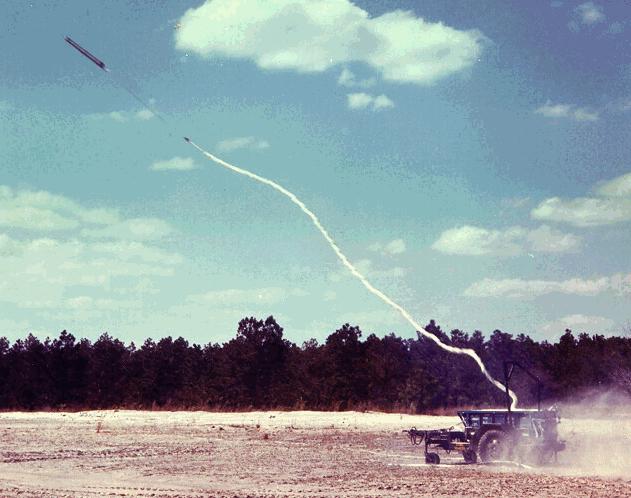
Mines suck. You can't see them. Really bad things happen if you step on them or roll over them. Bad things that generally sound like "BOOOOOM!!!" ...generally. Chemical mines only let out a quiet hissing noise, and tend to save your eardrums so that you can hear the sounds of your own painful, drawn out, agonizing death. Yay...
So, there are several options that you have, once you have discovered the minefield:
A) Go around. Sounds great, but this is likely why the minefield exists in the first place. Minefields are often emplaced as a channeling tool, to get the enemy (you!) to approach through a predesignated kill zone. You know....where they have advantageous terrain, artillery pre-plots, emplaced heavy weapons, and fun stuff like that.
B) Move the mines. This can be accomplished the easy way, via heavy vehicles equipped with mine plows and/or rollers, or...if you don't happen to have any of those lying around...the hope-you-aren't-low-ranking-or-on-Top's-shit-list way, by crawling forward inch by inch, probing the ground with a little stick. The easy way is not too bad, but the cleared avenue of approach is pretty much limited to the width of those mine-plows/rollers. The other way is slow, tedious, scary as hell, and (since the area is probably being watched by an observer with access to his artillery batteries) likely to get you dead while clearing said minefield.
C) Blow the damn thing up. Hell, blowing things up is one of the reasons that a lot of folks join the military in the first place....might as well incorporate the Boom-factor into this task as well.
Back in WWI, the Bangalore torpedo (which is pretty much a bunch of explosive-filled pipe sections that were fitted together, pushed out into the minefield, and then detonated) was developed in order to clear barbed wire during those jolly, carefree and happy days of trench-warfare. [pause for fond memories of trenchfoot and disease]
Finally, some genius came up with a great idea: "What's better than a bunch of explosives? A bunch of explosives that has a ROCKET ATTACHED TO IT!!" I like how this guy thinks...
Thus was born the M58 Mine Clearing Line Charge (aka MICLIC). Vehicle or trailer mounted, it consists of an explosive-filled hose that is pulled across the minefield, clearing an 8m by 100m swath.
This little bit from the wiki entry cracked me up:
In the event a MICLIC fails to detonate normally, it can be manually activated by time-delay fuses every few feet along the length of it. Due to the inherent dangers of entering a live minefield to manually arm the backup fuses on a charge that could still detonate at any moment, possibly while under enemy fire as well, the act is jokingly referred to as the "Medal of Honor run".Here's the MICLIC doing its thing...
By: Steve
06 May 2010
Tools of War: The M82A1 (aka M107) Sniper Rifle

Game-changers. In every genre of firearms, there is one. The blunderbuss. The Colt revolver. The M1 Garand. The Gatling gun. You get the idea...
The Barrett .50cal sniper rifle is another. Sure, there are other extremely accurate sniper rifles out there, don't get me wrong. And the vast majority of them fire the tried-and-true NATO .308cal rounds. That round has very good ballistics and makes for a very effective sniper rifle. And those rifles are still perfectly good weapons on the modern battlefield. By no means are they obsolete. But.....
The M21 and M24 .308cal sniper rifles had maximum effective ranges of about 700m and 800m, respectively. The M82 is good out to TWICE that range, with far, far, FAAAR superior terminal ballistics. Just look at the SIZE of this round! Compare the .50 BMG round to the NATO .308 Win round two to its right. It's just HUUUGE!

So, not only can your snipers hit targets much further out than they were previously able to, they can now do so at ranges where counter-sniper fire is a non-issue. And there is no denying the shock-value of the enemy having their leader's chest explode in front of their eyes, and having NO IDEA WHERE THE ROUND CAME FROM. Crapping their shorts? Hell yeah!!!
There is one drawback to this weapon system that will keep other sniper rifles in business for years to come - weight. For all the ballistic beauty that she possesses, the Barrett is one heavy bitch. 31 pounds heavy. Not that big of a deal when you have a machinegun, but incredibly heavy for something that you have to try to get all stealthy and low-crawl with in a Ghillie suit. But once you get to that firing position, it's all worth it.
Finally, the .50cal round is big enough to go beyond the traditional anti-personnel mission of the sniper. Now, a sniper can target and destroy trucks, lightly armored APC's, and even enemy weapon systems like mortars and machineguns. A large variety of .50 BMG rounds assist this new role.
I know you missed him last week, so here he is....your annoying, whispering ex-SEAL.
By: Steve
29 April 2010
Tools of War: Knives
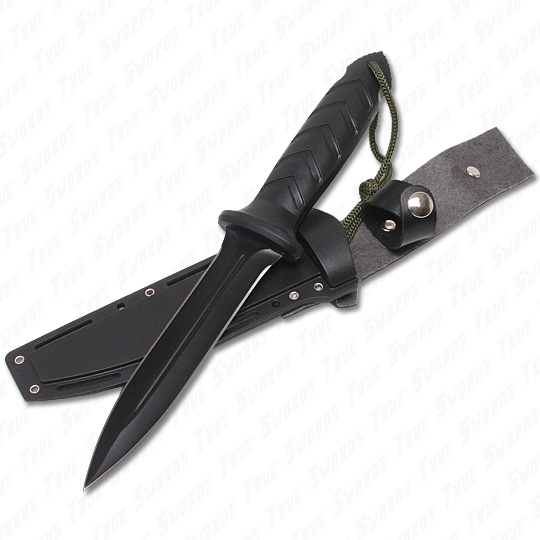 {A very short edition}
In modern militaries, knives are more of a tool than a weapon.
That said, they never run out of ammo and, in the case of bayonets, can be attached to your rifle in case things get stupid-bad.
Though I carry a CRKT M16-14SF with me everywhere I go, I'm not going to recommend it, or any other for that matter, over any other knife. There are so many different models and types out there, that my only advice is to find a quality knife that you like and that fits your needs.
Because that 550 cord won't cut itself....
By: Steve
22 April 2010
Tools of War: The M270 Multiple Launch Rocket System
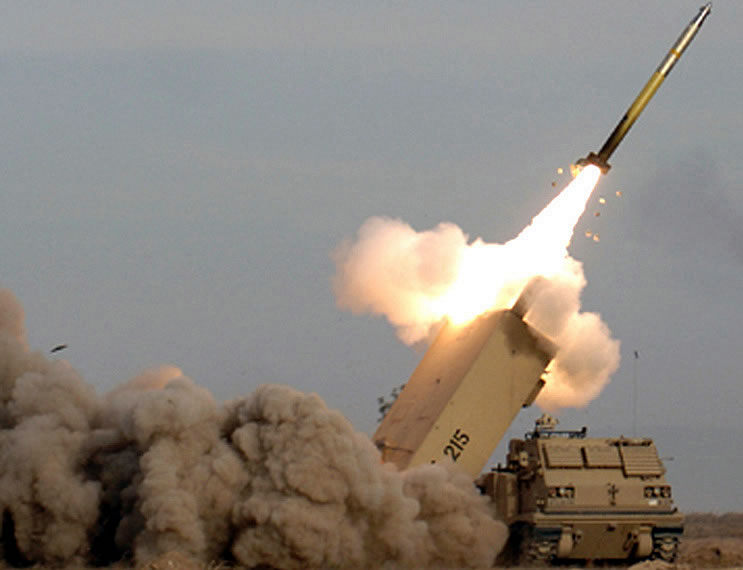
Field Artillery is known as the "King of Battle", due to it being the single highest casualty-producing weapons system on any battlefield during WW1 and WW2. The Soviets/Russians fully embraced that theory and have an ongoing reputation for never seeing an artillery piece that they didn't like, and never throwing away an artillery piece once they had it...ever.
Sure, this causes a few logistical issues, but you have to admit, it's hard to argue the logic. High volume of fire goes a long way in any battle, and high volume of really big, explosive rounds goes a looong, looong way. But that strategy is easiest to employ when you are in either a defensive scenario, or in a "known-route-of-advance" scenario (ie. the Fulda Gap).
Since US forces haven't fought substantially on our own soil against a foreign force since 1812, and since we have the benefit of a couple of oceans between us and most unfriendly nations, we have adopted a different tactic. Highly mobile, highly accurate, highly lethal, and highly deployable....and much fewer of them.
The M270 Multiple Launch Rocket System (MLRS) is the poster-child for that concept.
- Very mobile - Able to cross most any terrain, due to it's tracked-chassis, and capable of 40mph. In addition, it can fire its entire load-out of 12 rockets in less than a minute, and then move out prior to a counter-battery fire response.
- Highly accurate - Missile dependent, but with GPS-guided packages, it'll hit within 10 meters...and accuracy beyond that is kinda moot.
- Incredible lethality - They don't call it the "Grid-Square Removal Service" for nothing. With its primary loadout of submunition-equipped rockets, they can blanket an entire square kilometer. {Pause for effect....} Seriously, just stop and think about that for a minute. A. Whole. Grid. Square. "And just like that....poof. It's gone." Yeah, you fear being on the wrong side of this thing more than you fear being on the wrong side of Keyser Soze. Let's hear it for the wonder that is DPICM.
I know you've been missing having an annoying ex-SEAL around here, whispering away...so here he is. And subtitled for our German friends!
By: Steve
Subscribe to:
Posts (Atom)

 Posts
Posts

