Showing posts with label Mercenaries. Show all posts

19 July 2012

CIA Outsourcing "Assassinations"?

The problem with calling this "assassination" is that although semantically accurate, it deliberates uses the politically- and socially-charged terminology typically associated with the ideological targeting of major political figures. No one calls administration of a death penalty to a prisoner an "assassination" and no one considers snipers taking aim a key leaders on a battlefield to be an "assassination". This is not to excuse the deliberate hiding of a program from Congress, but it does raise a point about the language we use to describe it.

What are your thoughts?

It was one of the biggest secrets of the post-9/11 era: soon after the attacks, President Bush gave the CIA permission to create a top secret assassination unit to find and kill Al Qaeda operatives. The program was kept from Congress for seven years. And when Leon Panetta told legislators about it in 2009, he revealed that the CIA had hired the private security firm Blackwater to help run it. "The move was historic," says Evan Wright, the two-time National Magazine Award-winning journalist who wrote Generation Kill. "It seems to have marked the first time the U.S. government outsourced a covert assassination service to private enterprise."

The quote is from his e-book How to Get Away With Murder in America, which goes on to note that "in the past, the CIA was subject to oversight, however tenuous, from the president and Congress," but that "President Bush's 2001 executive order severed this line by transferring to the CIA his unique authority to approve assassinations. By removing himself from the decision-making cycle, the president shielded himself -- and all elected authority -- from responsibility should a mission go wrong or be found illegal. When the CIA transferred the assassination unit to Blackwater, it continued the trend. CIA officers would no longer participate in the agency's most violent operations, or witness them. If it practiced any oversight at all, the CIA would rely on Blackwater's self-reporting about missions it conducted. Running operations through Blackwater gave the CIA the power to have people abducted, or killed, with no one in the government being exactly responsible." None of this is new information, though I imagine that many people reading this item are hearing about it for the first time.

Isn't that bizarre?


By: Brant

05 April 2012

Lord of War and a Life Sentence

Looks like he might just be the lord of a jail cell.

Russian man who became known as the "Merchant of Death" for his exploits in the arms sales markets worldwide is set to learn how long he'll be in prison after his defense lawyers asked a judge to set him free and prosecutors asked that he never get out.
Viktor Bout, 45, faces a mandatory minimum of 25 years in prison and possibly life during sentencing Thursday for his conviction on terrorism charges. His lawyers have asked U.S. District Judge Shira Scheindlin to throw out his conviction, saying he's a political prisoner who stepped into a vindictive U.S. government sting operation.
Federal prosecutors say Bout should spend life in prison because he agreed "without hesitation and with frightening speed" to ship "a breathtaking arsenal of weapons," including hundreds of surface-to-air missiles, machine guns and sniper rifles along with 10 million rounds of ammunition to men he believed represented a foreign terrorist organization willing to kill Americans in Colombia.
They say his weapons fueled armed conflicts in some of the world's most treacherous hot spots, including Rwanda, Angola and the Congo and that he was looking for new arms deals in places like Libya and Tanzania when he was arrested.

So we're putting a guy in jail for fast, responsive customer service? I mean, if he had agreed to ship weapons to Colombia, but not "without hesitation and with frightening speed" would the prosecution still be so intense?
What if he was just shipping staple guns, and not "a breathtaking arsenal of weapons"?
What if they were intended to kill Peruvians, and not Americans?
Is the zeal with which the prosecution is proceeding due to the triangulation of efficiency, lethality, and target choice? How does changing any one of those change the approach to the prosecution?
Let's get real here: we're after him because he agreed to try to help kill Americans. We didn't care when he was supplying Rwandans, or Angolans. Keep his activities confined to Africa, and no one gives a rip. But come into our backyard, and suddenly, he's the world's greatest criminal, and-look-at-all-the-other-bad-things-he's-done-for-years** for which he should be locked away for life, and then jettisoned into the sun for good measure.

It just feels like we're trumping up justifications for pursuing a bad guy who we should've pursued a long time ago, if he was really that bad. And if the reason we care now is because he wanted to help kill Americans, then fine. Just come out and admit it, instead of hiding behind the faux-humanitarianism of putting a dent in the world arms trade.

By: Brant


** while we've been ignoring him

03 February 2012

Random Friday Wargaming: Mercenary Air Squadron

Something a bit different... here comes the Mercenary Air Squadron. No, that didn't seem quite dramatic enough.

HERE COMES THE MERCENARY AIR SQUADRON!

There, that's better.

From the company's website
As the year 2015 came to a close it was clear the world was in a new trend. Instead of fighting wars with their own conventional forces, nations found it easier to pass the burden of conflict along to private contractors. They could be expensive, but a mercenary force was less politically liable than a country and more expendable. The best survived, and went on to glory and profit. The most famous and sought after are the mercenary pilots.


Again, no forum at CSW, but VBAM games has it over here.

What do you guys think? Good idea? Wacky idea? Both?

Master links/images from Boardgamegeek.com; message boards linked to Consimworld. Other links to the actual game pages...


By: Brant

12 December 2011

XeWater Becomes... "ACADEMI"?!

Talk about rebranding... They're rebranding their rebranding. And everyone will still call them "Blackwater."

The company once known as the world's most notorious private security contractor, Blackwater, is changing its name and its look once again in a bid to prove that it has outgrown its toxic reputation.

Renaming the company "ACADEMI" tops a number of changes that have been made by a private equity consortium that purchased the company from former owner Erik Prince last year.

"The message here is not that we're changing the name," said Ted Wright, who came on as the new company CEO in June. "The message is that we're changing the company, and the name just reflects those changes. We have new owners, a new board of directors, a new management team, new location, new attitude on governance, new openness, new strategy - it's a whole new company."

Blackwater was dogged by controversy as it rose from a training facility in Moyock, North Carolina, in the late '90s, to a private security powerhouse at the height of the war in Iraq. But as business boomed, so did the demand for growth, and rules regarding issues like compliance and governance were sometimes not followed. There were also accusations that some Blackwater guards operating in Iraq's virtually lawless environment were heavy-handed, and then a deadly shooting in a Baghdad traffic circle in 2007 was the beginning of the end for the company.

Prince tried changing the Blackwater name to Xe, before selling it late last year to the group of investors led by Jason DeYonker, a managing partner at Forte Capital Advisors, and Dean Bosacki, managing partner of Manhattan Partners. The other investing partners remain anonymous.


By: Brant

19 October 2011

Looking Back At Biafra, Part IV

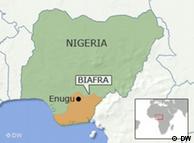
The end of Biafra was more than the end of a failed secession. It marked the end of a struggle for a homeland for the Ibo people, then end of several colorful mercenary careers, the end of the rare Cold War-era struggle that did not feature either the US or USSR as major patrons of either side.

The five hollow-eyed travelers who stepped warily from a Nigerian Airways plane at Lagos Airport one night last week had the fugitive look of men on the run. They were driven to the Federal Palace Hotel through deserted streets heavy with the stifling heat of Africa's dry season. Next morning, after a fitful sleep, they were escorted to the Dodan military barracks in a suburb of the Nigerian capital. There, in the first formal surrender ceremonies to end a military conflict since World War II, Biafra's Major General Philip Effiong signed a document ending the bitter 31-month civil war that has raged between Nigeria and its breakaway Eastern Region.

Said Effiong, in a simple act of fealty to Major General Yakubu Gowon, Nigeria's head of state and commander of its armed forces: "We are firm, we are loyal Nigerian citizens, and we accept the authority of the Federal Military Government of Nigeria. The Republic of Biafra ceases to exist." His voice sounded tired. When he finished, Gowon embraced him.

Biafra had ceased to exist two days before Effiong's formal surrender. With federal troops advancing on all fronts, General Chukwuemeka Odumegwu Ojukwu, 36, Biafra's leader, realized that he had lost. With his family, three aides, three tons of luggage and his white Mercedes-Benz staff car, Ojukwu caught one of the last flights out of the beleaguered airstrip at Uli. The refugees were loaded aboard a Superconstellation that took off for a destination that had still not been disclosed a full week later; various reports placed Ojukwu in Lisbon; Libreville, capital of Gabon; and the Ivory Coast. His flight left Effiong in command of a crumbling region, desperately short of food and medicine and totally shorn of the will to continue its doomed rebellion.

The conflict that ended with such stunning swiftness was the first big modern war waged in Black Africa since the continent's colonies began receiving their independence. It was also one of the most devastating civil wars in modern history. At the outset, Biafra's people numbered 12 million—about two-thirds of them Ibo, the rest belonging to minority tribes (as does Effiong, who is an Ibibio). The secessionist territory covered nearly 30,000 sq. mi. and included some of Nigeria's richest land. At the close of the war, 3,500,000 people were squeezed into a devastated area of 1,500 sq. mi. As many as 2,000,000 Biafrans, many of them children, had perished. The great majority had cruelly and slowly starved to death. Another 1,250,000 Biafrans, reduced to skeletons for lack of food, may die before aid can reach them—even though at least 24,000 tons of food, enough to feed 4,000,000 people for a month, is stockpiled not far from the war zone.

Why does Biafra fas fascinate me so much? No idea. Maybe it's my Southern roots holding sympathy for another failed secession. Maybe it's because I'm not sure the Biafrans did anything wrong and that the entire was was a power-grab by the military junta that rules Nigeria. Maybe it's the way the mercenary forces have been portrayed in the works of guys like Predrick Forsythe. I still find it interesting.

By: Brant

19 September 2011

Looking Back At Biafra, Part III

Another short snippet on Biafra, highlighting Rolf Steiner. (Yes, we skipped August in our re-runs of these articles...)

To reach Aba, federal forces had to cross the swift currents of the Imo River, which the Biafrans had established as the major defense line protecting Aba by the simple expedient of blowing up the main bridges. They had left just one bridge intact—at Awaza—and it was heavily mined. When federal marine commandos stepped onto the bridge, it, too, exploded and vanished. The blast, however, failed to stop federal soldiers from running across the catwalk on top of a natural-gas pipeline that spanned the river parallel to the bridge. As 50 virtually unarmed Biafran guards watched helplessly, a steady line of Nigerians made their way across the catwalk and pierced the Ibo heartland.

The backbone of Ojukwu's military resistance is a small group of white mercenaries commanded by Colonel Rolf Steiner, a 38-year-old former Foreign Legion sergeant who fought in Indo-China and Algeria. His ability to make the most of Biafra's minimal military resources has moved him steadily upward in rank and power since he signed on last December. When news of the federal onslaught reached Ojukwu, he hurried to Steiner's headquarters in an abandoned nunnery in Owerri.

Outside, monsoon rain was falling on a blue-and-white plaster Madonna whose forehead had been punctured by a bullet. Steiner was standing in the refectory, the strain of the war lining his face. "You must save Aba at any cost," pleaded Ojukwu. "You must hold the place—is that clear?" Steiner hesitated. "Mon colonel, I was only a sergeant in the Legion," he said. "I cannot command a division." Replied Ojukwu: "Oh, but you will. And you will hold."


By: Brant

19 July 2011

Looking Back at Biafra, Part II

Continuing our look back at the war in Biafra 50 years ago, this article from Time Magazine details how a Swedish adventurer built an air force from scratch. There were some crazy dudes fighting for Biafra back then...

Von Rosen, 59, is a Swedish nobleman with a passion for airplanes and a penchant for underdogs. "Once I get into a plane," he says, "I feel that I can do just about anything as long as I believe in it." As a young man he flew a Heinkel air ambulance in Ethiopia, helping victims of Italian aggression. When Russia attacked Finland, he signed up as a lieutenant in the Finnish air force. In the Congo in 1960, Von Rosen flew supplies for Swedish troops on United Nations peace-keeping duty. Now a senior pilot for a charter flight service called Transair Sweden, Von Rosen last summer hauled relief supplies to Biafra.

The plight of the Biafrans rekindled his sympathies for the outgunned and inspired an improbable, wildly romantic scheme: to marshal pilots and planes and create an instant air force for the planeless Biafrans. Last week, as the Biafran rebellion against Nigeria neared its second anniversary, Von Rosen and his flyers attacked the Nigerian airport at Benin, reported damage to one MIG and several civilian planes sitting on the ground. That raid and two earlier forays, which damaged British- and Russian-made Nigerian planes at Enugu and Port Harcourt, eased the pressure on Biafra's landing strip at Uli. With no Nigerian bombers overhead for a change, transports were shuttling in.

Von Rosen's air corps, which includes two Biafran pilots, has also given a psychological lift to Biafran troops fighting on despite the loss of their capital. Soon after Umuahia fell in April, Biafrans retaliated by recapturing the junction town of Owerri following a lengthy siege. Last week Biafran units were moving slowly southward from Owerri toward the oilfields around Port Harcourt. The Biafran strategy is not so much to regain lost territory as to prolong the standoff and inflict federal casualties until the Nigerians agree to peace talks and grant them independence. Toward such a goal, Count von Rosen's air force, however Lilliputian, is a significant help. As soon as his squadron has effectively disabled Nigerian airpower on the ground, Von Rosen intends to use his planes in close-up tactical air support of the Biafran troops.

By: Brant

19 June 2011

Looking Back At Biafra, Part I

Last month, when we featured a Biafra game on Friday's Random Friday Wargame, we promised to dig some Biafra articles out of the archives. Here's a nice article from Time Magazine about the mercenaries that served in the war.

From the outset, the war between Nigeria and secessionist Biafra loomed as an unequal contest. It was not surprising that, as in the earlier Congo conflicts, foreign mercenaries were drawn to Biafra to practice their trade: fighting. Nor was it surprising that the beleaguered Biafrans accepted their services—despite the fact that mercenaries can be narrow, violent men who often harbor a deep contempt for Africans. In the midst of the idealism with which Biafra pleaded its cause for independence, the mercenaries have operated—sometimes ugly, certainly anomalous, but perhaps necessary to Biafra's continued survival.

In 16 months of often brutal fighting, Nigerian federal troops have whittled Biafra down to one-tenth of its original area. They are now closing in on Umuahia, the secessionist state's last major town and the current seat of Lieut. Colonel Chukwuemeka Odumegwu Ojukwu's movable government. Umuahia would have long since fallen had it not been for the exploits of the best unit in Ojukwu's small army, Biafra's Fourth Commando Brigade. Commanded by nine white mercenaries, the Fourth spent the first three months of the year operating behind Nigerian lines. Later, it held sectors on the Western front but, outgunned and outmanned by the federals, was forced to retreat. By early September, after a doomed attempt to defend Aba with supplies equal to only a daily average of five rounds of ammunition per man, the Fourth was down to barely 1,000 effectives. Of the 7,000-odd men with whom it had started the campaign, more than 300 had been killed and 2,200 had been wounded. The rest were missing in action.

Record Supplies. Last week the Fourth Commandos were once more rebuilding under the command of a German-born ex-Foreign Legion sergeant who became a sector commander for the S.A.O. (Secret Army Organization) in Algeria and then a colonel for Ojukwu in Biafra. He is Rolf Steiner, and he considers the war to be far from lost, contemptuously dismissing the territorial gains of the heavily armed Nigerians. "If any corporal serving under me in the Legion had taken more than a week to conquer West Africa with their kind of equipment," he snorts, "I'd have him shot for dereliction of duty." Ojukwu, for whom Steiner has immense admiration, has authorized the Fourth to be expanded to two brigades, or 20 strike forces of 360 men each. The new men are being armed with weapons apparently bought with private European credits and flowing into Biafra from neighboring Gabon and the Portuguese island of São Tomé. Up to as much as 40 tons are said to be arriving every night—more than ever before in the war.

Colonel Steiner, 38, has been soldiering for most of his life. In the final days of World War II, he fought as a Hitler Youth in Germany's last-ditch defense against the advancing U.S. Army. After the German surrender, he enlisted in the French Foreign Legion. He spent seven years in Indo-China, an enfant terrible who was at least twice busted from sergeant to private. At Dienbienphu, he was wounded and lost the use of a lung. After five years of service in Algeria, a spell with the S.A.O. and a suspended sentence, he was living in Paris last year when he heard of Biafra. He set out to serve Ojukwu's cause, first as a "technical adviser," then as company commander, finally as boss of the Fourth Commando Brigade.

Red and Green. He has taken the Legion with him to Africa. Legion marches blare from a transistorized pickup that he carries almost everywhere, and the Fourth Commando standard bears the red and green of the Legion. At inspections, Steiner often gets his troops' attention by firing off a few rounds from his Browning, then lectures them, his walking stick under one arm. "You are not Legionnaires," he will rant after a particularly bad showing. "You are not men." He has demoted at least one captain to private, but has also been known to pick a good man from the ranks and make him an officer. When he recently elevated a private to 2nd lieutenant, one of his officers complained: "My dear chap, we can't have someone in the mess eating with his fingers." Steiner, who speaks French and German, replied that he did not care if the man ate with his feet, as long as he was a good soldier.

Steiner likes beer, Benson & Hedges cigarettes, violence and very little else. Compulsively clean, he throws even slightly dusty plates at his mess waiters, then kicks them to drive the point home. But he also plucked a 21-year-old Ibo boy from the side of his dead parents, adopted him and named him Felix Chukwuemeka (after Ojukwu) Steiner.

The troops do not seem to mind the harshness of the command; they follow Steiner because they believe he is a winner and because he has juju (good luck). Thus Steiner has had no trouble refilling the depleted ranks of the Fourth at this late stage in the conflict. Guerrilla warfare may be the way out, he thinks. "If the towns are taken, we will go into the bush," he says. "We could do the job. But we must have weapons. We don't need armor. We need trucks. We don't need much air. But spotter planes would be useful."

Bulletproof. Steiner's mercenary officers are a mixed lot, united only by loyalty to their commander, distinguished only by their combat experience and their foibles. Major Taffy, 34, Welsh and a veteran of the Fifth Commando mercenaries of the Congo, thinks he is bulletproof. By now, so do the federals, who have reported him dead at least five times since last December. Taffy came perilously close to being killed a few weeks ago, when a round smashed into his binoculars. Short-tempered, he curses his black troops constantly, threatening to kill them if they don't obey orders. "You rotten bastards!" he roars, when things go wrong. "You bloody, treacherous morons!"

Captain Paddy, an Irishman who has spent 22 of his 54 years in Africa, is the unit's master mechanic. Just before Port Harcourt fell to the federals early last summer, he scrounged up a convoy of trucks and liberated—under fire —the entire workshop of the Shell-B.P. refinery there. When Aba had to be evacuated last month for lack of ammo, Paddy was one of the last men out, a machine gun in one hand, a demijohn of wine in the other. Captain Armand, a former French paratrooper and veteran of Algeria, sports a Yul Brynner pate and fights on despite bazooka fragments in one hand. Another veteran has just left Steiner. Captain Alec, a onetime British paratrooper, used to walk around with a Madsen submachine gun, an FN rifle, and a shotgun, "just in case I have to shoot my way out of this bloody place." He believed in the "little people," who, he would say in all seriousness, "will jam your machine guns and cause your rockets to misfire." He was wounded four times in six days before he left Biafra.

Outcasts. The mercenaries' salaries run from $1,700 a month upward. But payday is at best a sporadic affair in besieged Biafra. In any case, money is probably not the major reason for their presence. It is not the land, either, for they seem to have no eyes for the green rolling infinity of the African bush, the visionary sunsets, the humming, warm, smoky nights. They are lobos, outcasts from society who fight every day in order to taste the excitement that comes in living close to violent death. If they survive Biafra, they will doubtless drift on in search of another war. Until then, their allegiance, temporary though it may be, is to Biafra and to Ojukwu.

I've actually read Steiner's book - got it from a friend back in the mid-80s - and it's a fun read. It's incredibly one-sided, as you expect a biography to be, but he's been in a lot of action over the years, and his accounts of Indochina, Algeria, and Biafra are all very compelling.

By: Brant

15 May 2011

A Prince Builds an Army for a Sheik

Even if this turns out to be legal, it can't be a good idea.

The Colombians had entered the United Arab Emirates posing as construction workers. In fact, they were soldiers for a secret American-led mercenary army being built by Erik Prince, the billionaire founder of Blackwater Worldwide, with $529 million from the oil-soaked sheikdom.

Mr. Prince, who resettled here last year after his security business faced mounting legal problems in the United States, was hired by the crown prince of Abu Dhabi to put together an 800-member battalion of foreign troops for the U.A.E., according to former employees on the project, American officials and corporate documents obtained by The New York Times.

The force is intended to conduct special operations missions inside and outside the country, defend oil pipelines and skyscrapers from terrorist attacks and put down internal revolts, the documents show. Such troops could be deployed if the Emirates faced unrest or were challenged by pro-democracy demonstrations in its crowded labor camps or democracy protests like those sweeping the Arab world this year.

We're pretty sure this is Zayed Military City, but if not, someone please set us straight. Clearly not all the construction was in progress when this image was taken.


View Larger Map

By: Brant

30 March 2011

Outsourcing the War in Libya?

At least someone in the US military establishment has decided to go public with the idea that we should outsource the war in Libya.

It is time to state the glaringly obvious. Without at least some boots on the ground in support of the rebels, the conflict in Libya will in all likelihood settle into a grinding stalemate. The air cover provided by the United States and a slowly growing coalition has pegged back Col. Moammar Gadhafi's forces, but it will take more than air cover to ensure a rebel victory. The rebels have displayed laudable courage and enthusiasm. But they lack the basic military organization necessary to effectively tackle the weak, but better equipped and organized, government forces.

The United States, however, is rightly chary about getting sucked into another ground war, and the other contributors to the no-fly zone are even less enthusiastic. But the alternative of sustaining an expensive air campaign over an indefinite period is also unappealing.

There is a third option that seems not to have been considered but which offers real possibilities. Outsource the problem. Provide the necessary funding for the rebels to secure the services of one or more of the private companies that could supply the necessary expertise and logistical support to turn the rebel rabble into a genuine fighting force.

By: Brant

03 December 2010

GrogNews Late Daily Headlines


WikiLeaks keeps dripping... They've been forced to change domain servers due to DNA attacks. They're under legislative attack by Senator Lieberman, and ASSange is still wanted on a warrant his lawyer says isn't valid. Wired says that the leak hasn't "broken" U.S. Intelligence... yet.
Today's leak 'revelations'? Karzai is "paranoid". Oh, and gravity holds people to the planet. There was a 'spat' between the US and UK over spy flights from Cyprus.

South Korea is raising the rhetoric and promising air strikes if the Norks attack again.

Puntland is standing up a private military that has the US concerned.

The Ivorian military has sealed the borders after the government declared the winner in the recent election.

More uniformed grumbling over the end of DADT.

And we need to stop panicking over incompetent terrorists, says Ackerman. Hell, Kung Fu Monkey has been telling you to "sack up" for years.

By: Brant

03 October 2010

Afghanistan Closing Down "Contractors"?

The Afghan government is starting to shut down contract security firms.

The Afghan government said Sunday it has started dissolving private security firms in the country by taking steps to end the operations of eight companies, including the firm formerly known as Blackwater and three other international contractors.

"We have very good news for the Afghan people today," presidential spokesman Waheed Omar told reporters in the capital. "The disbanding of eight private security firms has started."

Afghan President Hamid Karzai announced in August that private security contractors would have to cease operations by the end of the year — wiping out an industry with tens of thousands of guards who protect military convoys, government officials and businesspeople.

Some security contractors have been criticized for operating more like private militias, and the government said it could not have armed groups that were independent of the police or military forces.

The eight companies include Xe Services — the North Carolina-based contractor formerly called Blackwater — Virginia-based NCL Holdings LLC, New Mexico-based Four Horsemen International and London-based Compass International, Omar said. Two large Afghan firms, White Eagle Security Services and Abdul Khaliq Achakzai, are also on the list. The remaining two companies are small operations with fewer than 100 employees, so he declined to name them.


By: Brant

24 September 2010

So This Is What Blackwater Did Off Duty...

Wired's Danger Room blog has a shocking article on alleged out-of-control behavior by off-duty Blackwater employees in Iraq. Among the highlights:


... use of steroids and human growth hormone, testosterone, were pretty endemic to them and almost companywide ...

"company personnel had large amounts of cocaine and blocks of hashish and would run around naked.” Addled guards would step onto the balconies of the their rooms at the Hamra Hotel, point their automatic rifles at Iraqi housing complexes and open fire.

And to think I would look up at the Blackwater MD-500's buzzing over Baghdad and think "I wish I were that guy sitting on the skid with the tricked-out M4. He must be having more fun than me." Well, I guess he might have been, but it's not my kind of fun.


Kudos to the author, Spencer Ackerman, on the article's title, by the way: "Ain't No Party Like a Blackwater party, 'cause a Blackwater party Got Coke, 'Roids, and AK's." These Blackwater guys make Coolio (who wrote the rap song "Sumpin' New" with the often-paraphrased line) and his homies seem like a bunch of amateurs when it comes to partying.


By: Guardian

04 September 2010

Shady Dealings from Xewater?

Supposdly they created some shell companies to funnel money around. Either that or we're piling on because it's cool to do so.

The security company Blackwater Worldwide formed a network of 30 shell companies and subsidiaries to try to get millions of dollars in government business after the company faced strong criticism for reckless conduct in Iraq, The New York Times reported Friday.
The newspaper said that it was unclear how many of the created companies got American contracts but that at least three of them obtained work with the U.S. military and the CIA.
Sen. Carl Levin, chairman of the Senate Armed Services Committee, has asked the Justice Department to see whether Blackwater misled the government when using the subsidiaries to gain government contracts, according to the Times.
It said Levin's committee found that North Carolina-based Blackwater, which now is known as Xe Services, went to great lengths to find ways to get lucrative government work despite criminal charges and criticism stemming from a 2007 incident in which Blackwater guards killed 17 Iraqi civilians. A committee chart outlines the web of Blackwater subsidiaries.


By: Brant

21 August 2010

Xewater Back in the Contracting Game

After a settlement with the State Department, BlackXE-water is once again free to compete for government contracts.

Xe, the private security firm once known as Blackwater, has reached a $42 million settlement with the U.S. State Department over alleged export violations, a State Department official said.
Darby Holladay, a State Department duty officer, said the civil settlement was reached Wednesday for 288 violations between 2003 and 2009, when the company personnel were guarding U.S. staff overseas.
They involve the "unauthorized export" of defense articles and services to "foreign end-users in multiple countries" and "false statements and misrepresentation or omission of material facts in information provided to the department."
Also, Holladay said, there were violations "of provisos or limitations on export licenses."
But the violations, he said, "did not involve sensitive technologies or cause known harm to U.S. national security."
Xe is pleased with the settlement, which will allow it to continue to get government contracts.


By: Brant

Did the Taliban Hire a Sniper in Sangin?

There seems to be a sniper running around Sangin, but is he local or a hired gun?

There have been claims that at least three snipers trained in Iran or Pakistan are thought to be at work across Afghanistan.

Earlier this year it emerged that the SAS had been sent out to track a Taliban sniper operating around Sangin.

A senior officer disclosed that a single gunman was thought to be responsible for the deaths of up to seven soldiers from 3rd Battalion, the Rifles, stationed in Sangin.

Sapper Foster, 20, from Whitehaven, Cumbria, was on duty in a lookout post at Patrol Base Sangin Fulod on August 13.

The post is protected by thickened glass with only small gaps through which those on guard can point their weapons.

US forces, working alongside British troops at the base, disclosed that it is thought the gunman timed a single shot for the moment he walked past the opening.

"He hit a moving target in a space this big," Captain Jim Nolan, a company commander serving with the US Seventh Marine Regiment told the Wall Street Journal, holding his hands about nine inches apart.


View Larger Map

By: Brant

11 June 2010

Congo Still Wants to Put Norwegians to Death

Following up an earlier story here on GrogNews, Congo has re-tried the Norwegians and found them guilty again.

Two Norwegian ex-soldiers have been sentenced to death for a second time in Democratic Republic of the Congo by a military tribunal.

Joshua French, 28, who has dual citizenship with Britain and briefly served in the British army, and Tjostolv Moland, 29, were originally found guilty of murder and espionage by a Congolese court last year.

The men, who had been working as private military contractors in other countries and were operating in Congo under murky circumstances, denied shooting dead their driver Abedi Kasongo in May 2009. They claimed bandits killed him.

During the first trial the court also fined Norway $60m (£41m), alleging that the Norwegian men were spies.

The death sentences were upheld on appeal, but in April a military court in the capital Kinshasa overturned the convictions for technical reasons and ordered a retrial with fresh judges.

That took place in the north-eastern city of Kisangani, near where Kasongo was killed. Colonel Pierre Agabu, the prosecutor, said today that French and Moland had again been sentenced to death for murder, attempted murder, criminal association and spying.


By: Brant

17 April 2010

Blackwater connection to arms case?

Blackwater's folks are in more sheep dip again...

Five former employees of the U.S. defense contractor Blackwater Worldwide were indicted on Friday, including its former president Gary Jackson, on several weapons charges and making false statements.
They were accused of skirting federal firearms laws and misrepresenting the weapons they were buying and the identities of the purchasers. This included a case in which weapons were given to Jordanian officials in hopes of winning their business, while it was stated they were bought by employees.
Also charged in the 15-count indictment were the company's former general counsel Andrew Howell, former executive vice president William Mathews, former vice president of logistics and procurement Ana Bundy, and former armorer Ronald Slezak.


Even if Blackwater had nothing to do with it, their reputation is such that they'll be mentioned even if they're only tangentially connected.

By: Brant

24 March 2010

Private Protection Perforate Pesky Pirates

Security on board a freighter put a few holes in the thugs of the sea.

Private security guards shot and killed a Somali pirate during an attack on a merchant ship off the coast of East Africa in what is believed to be the first such killing by armed contractors, the EU Naval Force spokesman said Wednesday.
The death comes amid fears that increasingly aggressive pirates and the growing use of armed private security contractors onboard vessels could fuel increased violence on the high seas. The handling of the case may have legal implications beyond the individuals involved in Tuesday's shooting.
The guards were onboard the MV Almezaan when a pirate group approached it twice, said EU Naval Force spokesman Cmdr. John Harbour. During the second approach on the Panamanian-flagged cargo ship which is United Arab Emirates owned, there was an exchange of fire between the guards and the pirates.
An EU Naval Force frigate was dispatched to the scene and launched a helicopter that located the pirates. Seven pirates were found, including one who had died from small caliber gunshot wounds, indicating he had been shot by the contractors, said Harbour. The six remaining pirates were taken into custody.


By: Brant

20 March 2010

Shady Arms Deals Lead All The Way to the UN

Looks like the FBI Sting in Las Vegas a few months ago netted more than just some little fish. Apparently the trail of money and shady deals goes all the way up thru the UN hierarchy...

The deal looked simple enough: U.S. military equipment suppliers bribed an African defense minister's salesmen to secure part of a $15 million gig to outfit a presidential guard.

But the salesmen were actually FBI agents. And the operation resulted in what U.S. authorities in January called their biggest foreign bribery sting to date, netting 16 indictments and 22 arrests of small arms and military equipment makers.

At the center of the U.S. case is Richard Bistrong, a former Florida executive who first surfaced in a series of cases of bribes and bid-rigging for multimillion-dollar U.N. peacekeeping contracts. The trail to Bistrong is laid out in U.N documents, e-mails and legal filings reviewed by The Associated Press.

The story of Bistrong and the military equipment suppliers shows how vulnerable the United Nations is to corruption in how the billions of dollars a year that it oversees are spent. It also raises questions about how well that spending will be monitored in the future: The anti-corruption unit that first uncovered the bribery and bid-rigging was disbanded in 2008, after more than 300 investigations in three years.

"It is greatly disturbing that an organization plagued by corruption and mismanagement would disband its anti-corruption task force," said U.S. Rep. Ileana Ros-Lehtinen of Florida, the ranking Republican on the House Foreign Affairs Committee, who has proposed requiring the U.N. to do more to fight corruption or risk losing U.S. financial support. "What will the (Obama) administration do to address U.S. taxpayer dollars being misappropriated, squandered, and stolen at the U.N.? We need to demand concrete reform now."


At least one guy who was kinda-sorta-not-really caught in it was close enough to the fire that even though he wasn't cooking anything, he still got burned: his company revoked his clearance, turned off his phone/email, and had his desk contents boxed and dropped off at his house before he was home on the plane from Las Vegas. Dont' screw around with the Feds. Just do it right and no one gets screwed.

By: Brant